Featured in Connecting With Ancestors, Cough & Throat Soothe, and Digestive Aid
Native to Europe and Asia but it has naturalized and grows voraciously in the United States
Herbal Energetics: Cooling • Drying • Nourishing
Associated Sign(s): Cancer
Associated Chakra(s): Root
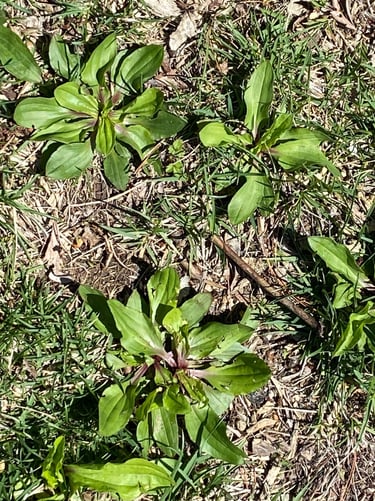
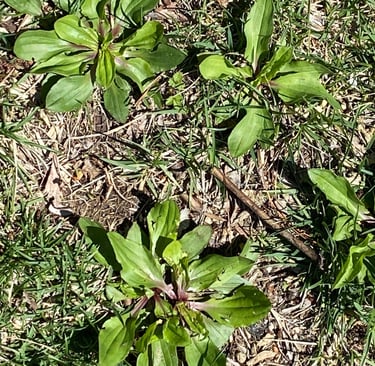
Plantain is a humble yet powerful plant with a long history of medicinal, folk, and ritual use. It is native to Europe and Asia, and has naturalized widely across the United States, often thriving along roadsides, sidewalks, and other well-traveled or disturbed areas. This plant has been referred to as “White Man’s Footsteps,” which reflects the way Plantain sprang up along the paths of colonizers, quietly establishing itself wherever the land was compacted. Often dismissed as a weed, Plantain is a striking example of the hidden magic found in everyday life.
Plantain is most closely aligned with the Root chakra, offering stability, reassurance, and a sense of safety during times of stress or emotional vulnerability. In some magical traditions, it is also associated with clarity, the dispelling of darkness, cultivating inner strength, and emotional resilience. Whether used in ritual, spell work, or quiet reflection, Plantain reminds us that strength does not always announce itself loudly. Sometimes strength is demonstrated through smaller, less glamorous things, acts of restoration, or internal reassurance.
A true herbal powerhouse, Plantain may be used both internally and topically. With cooling, drying, and nourishing energetics, it has traditionally been valued as an emollient to soothe and restore irritated tissues of the respiratory and digestive tracts. It is also considered an expectorant, helping to loosen and clear congestion. Externally, Plantain has been used to calm inflammation, support wound healing, and draw out heat or irritation, making it a trusted ally for first aid, recovery, and gentle restoration.
Beyond its physical benefits, Plantain Leaf holds a strong place in ritual and magical traditions, where it has long been associated with protection, healing, and inner strength. Because it grows underfoot and along well-worn paths, it is said to guard travelers and ease weariness. It was historically placed inside a shoe for endurance, or hung from a car’s rearview mirror for protection during journeys. Dried Plantain Leaf is often included in charm pouches to symbolize resilience, grounding, and steady healing, while a strained Plantain tea may be added to bathwater for symbolic cleansing and energetic grounding.
Contraindications – Conditions / Symptoms:
Avoid if you are allergic to plants in the Plantaginaceae family (e.g., snapdragon, foxglove, etc.)
Plantain belongs to a class of herbs known as Emmenagogues, which can stimulate menstruation and should be avoided when you are pregnant or working to become pregnant
Contraindications – Drug Interactions:
Avoid plantain tea if you are taking Carbamazepine or Lithium
Please consult with your doctor, pharmacist, or trusted herbalist before including Plantain if you are taking blood thinners, medications for blood pressure, seizures, and/or nerve pain
Teas to help you connect with your community, yourself, and your spirit team.
© 2025. All rights reserved.